
Kevin Warsh and the Federal Reserve’s New Policies: Impact on the U.S. Dollar, Oil, and the Middle East Economy
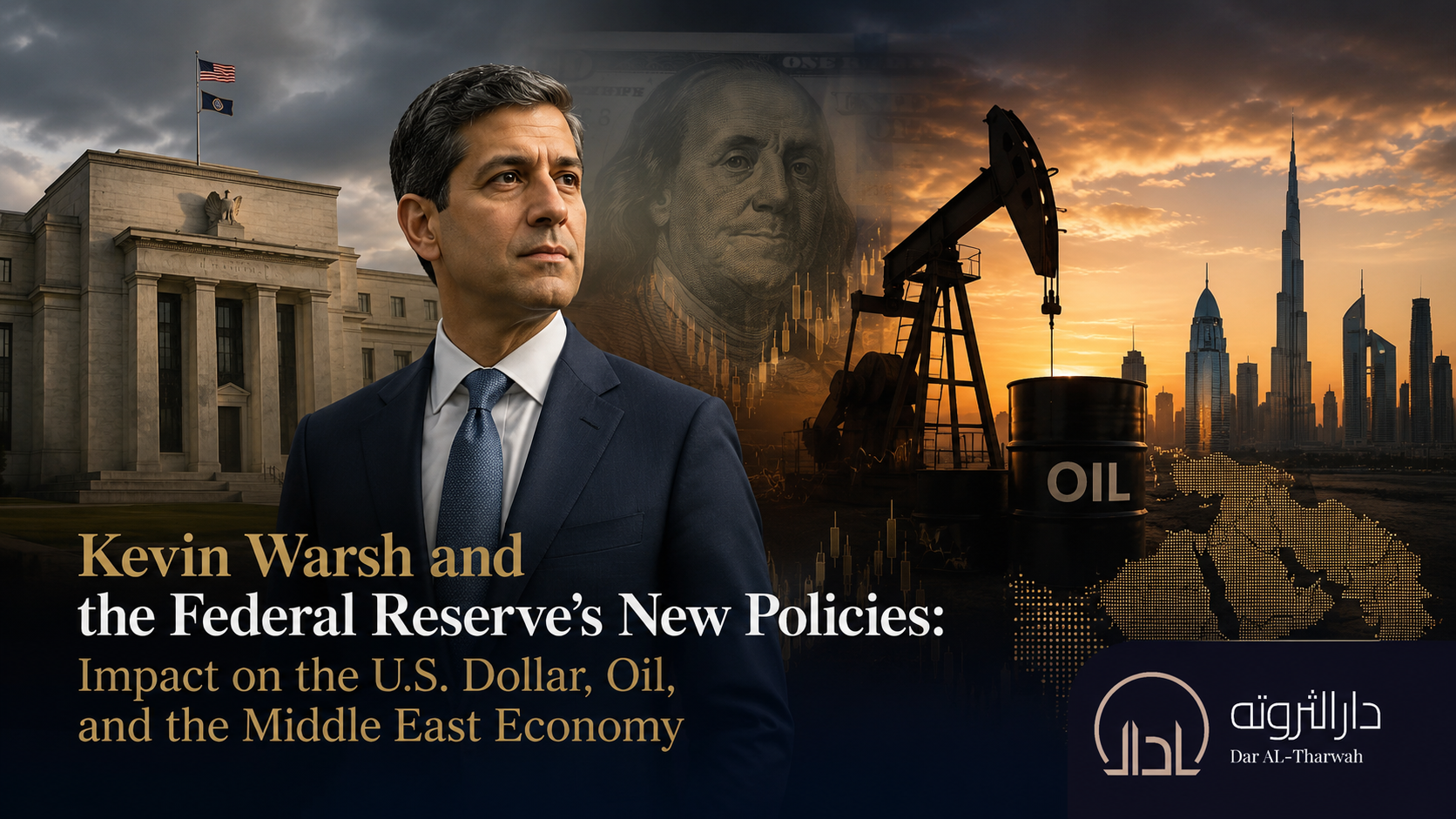
The appointment of a new Chair of the U.S. Federal Reserve is typically regarded as one of the most significant economic events in the world. However, Kevin Warsh’s appointment cannot be viewed as merely a leadership...
The appointment of a new Chair of the U.S. Federal Reserve is typically regarded as one of the most significant economic events in the world. However, Kevin Warsh’s appointment cannot be viewed as merely a leadership change at the helm of the United States’ central bank. Many analysts believe that Warsh’s arrival could mark the beginning of a new era in U.S. monetary policy—one in which the Federal Reserve’s role in financial markets, its approach to managing inflation, and even its relationship with investors may undergo significant changes.
The Federal Reserve is not responsible solely for managing the U.S. economy. Its decisions influence the value of the U.S. dollar, global interest rates, stock markets, commodity prices, capital flows, and even the economic policies of countries around the world. As a result, any shift in the new Chair’s approach can have consequences that extend far beyond the borders of the United States.
In this context, Kevin Warsh stands out as a figure with a background that differs from many previous Federal Reserve Chairs. In addition to his experience on Wall Street and in financial markets, he also served as a member of the Federal Reserve Board of Governors during one of the most critical periods in U.S. economic history. This has led many economists, investors, and market participants to pay close attention to his views.
But what makes Kevin Warsh such an important figure for the U.S. and global economy? To answer this question, we must first take a closer look at his professional background and economic experience.
Who Is Kevin Warsh, and Why Does His Selection for the Federal Reserve Matter?
To understand the significance of Kevin Warsh’s leadership at the Federal Reserve, it is important to examine his professional background. Unlike many monetary policymakers who come to the central bank from academia, Warsh’s career combines financial markets, economic policymaking, and crisis management. This has given him a distinct perspective on the economy and the role of the central bank.
Warsh began his career in the financial markets at Morgan Stanley. This experience provided him with first-hand insight into Wall Street, investor behavior, capital flows, and asset pricing—knowledge that many economic policymakers understand only from a policy perspective.
He later moved into economic policymaking within the U.S. government before joining the Federal Reserve Board of Governors. The most significant period of his career was his service at the Federal Reserve from 2006 to 2011, during the 2008 global financial crisis.
Unique Experience at the Heart of the 2008 Financial Crisis
The 2008 financial crisis was far more than an ordinary recession. The collapse of the U.S. housing market, the failure of major financial institutions, a severe liquidity crisis, and a sharp decline in global stock markets pushed the world economy into an unprecedented period of instability. At the time, the Federal Reserve was forced to implement emergency measures to prevent the collapse of the financial system.
Kevin Warsh served on the Federal Reserve Board of Governors during this critical period and was directly involved in decisions that reshaped the course of the global economy. He did not observe the crisis from the outside; rather, he was at the center of decision-making on banking risk management, liquidity injections, and support for financial markets.
This experience is significant because many of Warsh’s current views on the role of the central bank were likely shaped during that period. He witnessed firsthand how systemic financial risks can trigger a crisis, and how extraordinary central bank policies can stabilize markets and prevent a broader economic collapse.
How Warsh Differs from Traditional Central Bank Leaders
Kevin Warsh cannot be described as simply an academic economist. His perspective is shaped by a combination of hands-on market experience, macroeconomic policymaking, and crisis management. As a result, his decisions are not based solely on theoretical models; they also take into account their real-world impact on investors, banks, and financial markets.
For businesses and investors, this distinction is important. The Chair of the Federal Reserve does more than set interest rates—through public statements and policy signals, the Chair can also influence market behavior. Someone with years of experience on Wall Street is typically more sensitive to how markets react and to the unintended consequences of monetary policy decisions.
However, Kevin Warsh’s significance extends beyond his professional background. What has made him one of the most debated figures in U.S. monetary policy is his critical view of the Federal Reserve’s actions following the 2008 financial crisis. These views have the potential to significantly influence the future direction of the U.S. central bank.
Kevin Warsh’s Critique of the Federal Reserve: Is the Era of Permanent Market Support Coming to an End?
If Kevin Warsh’s professional background is one reason analysts pay close attention to him, his critical views of the Federal Reserve’s performance in recent years are arguably the most significant factor that could shape the future of U.S. monetary policy. Many economists and market participants believe that Warsh’s true importance lies not in his past experience, but in his perspective on the role of the central bank in the economy and financial markets.
Following the 2008 financial crisis, the Federal Reserve entered a period in which expansionary monetary policy became one of its primary tools for managing the economy. Interest rates were kept at exceptionally low levels for an extended period, large-scale asset purchase programs were implemented, and the Federal Reserve’s balance sheet expanded to unprecedented levels. The main objective of these measures was to prevent a deeper recession, support employment, and restore confidence in the financial markets.
In the short term, these policies helped prevent a more severe economic downturn. However, over time, some experts began to warn about their long-term consequences. Kevin Warsh emerged as one of the most prominent voices criticizing this approach.
The Federal Reserve: From Market Observer to Key Player?
From Warsh’s perspective, one of the most important issues in recent years is that the Federal Reserve has gradually moved away from its traditional role. In the past, the central bank was mainly seen as an institution responsible for maintaining price stability, controlling inflation, and ensuring the health of the financial system. However, after the 2008 crisis, the scope of its interventions expanded significantly.
Large-scale asset purchase programs turned the Federal Reserve into one of the biggest players in the U.S. bond market. As a result, many investors began to feel that the central bank was no longer just a market observer, but had effectively become part of the market itself.
Critics argue that as the Federal Reserve’s role in financial markets grows, investors become increasingly dependent on its decisions. For this reason, even a single speech, statement, or subtle change in tone from Fed officials can trigger significant volatility in financial markets.
Warsh has repeatedly emphasized that this excessive dependence could become one of the structural weaknesses of the financial system.
The concept of the “Fed Put” and Warsh’s criticism of the market bailout culture
One of the most important concepts discussed among market participants in recent years is the term “Fed Put.” This term refers to a mindset in which many investors believe that whenever market conditions become difficult, the Federal Reserve will step in and prevent a market collapse by lowering interest rates, injecting liquidity, or implementing supportive policies.
In such conditions, investors tend to take on more risk, because they assume that the central bank will ultimately not allow a major crisis to occur. This is the same culture that, according to many observers, Kevin Warsh takes a critical stance toward.
From his perspective, markets should be able to naturally manage and price a portion of their own risks. If investors consistently expect support from the central bank, the mechanisms of price discovery and risk assessment will become distorted.
The End of the Era of Permanent Market Support?
Another area of Warsh’s criticism relates to a policy known in recent years as “Forward Guidance.” Under this approach, the Federal Reserve attempted to make its future policy path clearer to markets through statements, press conferences, and economic projections.
During times of crisis, this policy had significant advantages. Investors could make decisions with greater confidence, and sudden shocks to markets were reduced. However, in the long run, it also increased the markets’ dependence on guidance from the central bank.
Kevin Warsh is among those who believe that markets should not rely on the Federal Reserve’s interpretation or explanations for every decision. From his perspective, investors should focus on real economic data rather than verbal signals from monetary authorities.
If this view were to translate into actual policy under his leadership, financial markets could face a very different environment—one in which predicting Federal Reserve decisions becomes more difficult than before, and the importance of analyzing economic data directly increases significantly.
The Beginning of a Fundamental Shift in Monetary Policy Philosophy
Overall, Kevin Warsh’s criticisms cannot be seen merely as opposition to a few policy tools. What can be inferred from his statements and positions is a kind of rethinking of the philosophy behind the role of the central bank—a philosophy that emphasizes a smaller role for the Federal Reserve, reduced direct intervention in markets, a stronger focus on controlling inflation, and a return of risk management responsibility to investors themselves.
However, if this perspective were to become official Federal Reserve policy, an important question would arise: what exactly would the U.S. central bank look like under Kevin Warsh’s leadership, and how would its policy-making structure change? Answering this question could provide a clearer picture of the future of the U.S. economy and global markets.
The Federal Reserve under Kevin Warsh: smaller, quieter, more focused, and stricter
If we were to summarize Kevin Warsh’s views in a few phrases, four main themes emerge: the Federal Reserve should be smaller, speak less, remain focused on its core mandate, and take a stricter stance against inflation. This approach could place U.S. monetary policy on a different path compared to recent years.
Many analysts believe that Warsh’s leadership would not simply represent a change in the person at the top of the Federal Reserve, but could signal a shift in the very philosophy of how the U.S. central bank is run—a change that would have an impact on the U.S. economy and global financial markets.
A Smaller Federal Reserve: The End of Massive Balance Sheets?
One of Warsh’s most important criticisms relates to the expansion of the Federal Reserve’s balance sheet in the years following the 2008 financial crisis and especially during the COVID-19 period.
During these years, the U.S. central bank significantly expanded its balance sheet by purchasing large amounts of bonds and financial assets, reaching unprecedented levels. While this policy helped stabilize markets during times of crisis, critics argue that it turned the Federal Reserve into an unusually large player in financial markets.
From Warsh’s perspective, the central bank should not grow so large that it overshadows the natural price discovery mechanism in asset markets. Therefore, under his influence, a smaller balance sheet and a reduced role for the Federal Reserve in bond markets would likely become more important priorities.
A Quieter Federal Reserve: Reducing Market Dependence on Signals
The second key characteristic attributed to Warsh is a reduction in direct communication and guidance to markets.
In recent years, investors have closely monitored every statement from the Federal Reserve Chair and every shift in tone from policymakers, with market reactions often becoming more dependent on central bank messaging than on actual economic data.
Warsh views this level of dependence as problematic. As a result, many expect that under his leadership, the Federal Reserve would provide less explicit guidance about the future path of interest rates and its potential policy plans, encouraging markets to rely more on underlying economic data instead.
Returning to the Core Mandate: Inflation and Financial Stability as Priorities
In recent years, the range of topics on which the Federal Reserve commented had expanded. However, from Warsh’s perspective, the central bank is more effective when it remains focused on its core responsibilities: controlling inflation, maintaining price stability, supporting the health of the financial system, and enabling sustainable growth.
This focus could mean reducing unnecessary interventions and avoiding involvement in areas outside the central bank’s traditional mandate. For markets, the message is clear: Federal Reserve decisions would be driven primarily by inflation, the labor market, and financial stability.
Tighter Anti-Inflation Policy: The Key Priority of a New Era
Perhaps the most important feature of the Kevin Warsh era is a stricter stance on inflation.
Inflation has become one of the biggest challenges for the U.S. economy in recent years, affecting household purchasing power, production costs, corporate planning, and economic expectations.
From Warsh’s perspective, the credibility of the central bank depends on its ability to control inflation. Therefore, if inflationary pressures persist, it is unlikely that he would quickly lower interest rates merely to support the stock market or short-term economic growth.
This matters for investors because, in the past, many expected that whenever economic growth faced challenges, the Federal Reserve would respond by cutting rates to support markets. However, under Warsh, the primary priority appears to be preserving the central bank’s anti-inflation credibility—even if that decision is not welcomed by markets in the short term.
Why is this shift in approach important for investors?
The combination of these four features could create a different environment for financial markets. A smaller, quieter, more focused, and stricter Federal Reserve means that investors can no longer rely on central bank support as they did in the past.
In such an environment, economic data analysis, risk assessment, company fundamentals, and understanding broader market trends become more important. Market volatility may also increase, as confidence in future central bank actions becomes less certain.
But a more important question remains: what impact would such an approach have on U.S. interest rates? Has the era of rapid rate cuts come to an end, or will Kevin Warsh pursue a different path? The answer to this question could shape the future of global financial markets.
Interest Rate Policy in the Kevin Warsh Era: Fighting Inflation or Supporting Economic Growth?
One of the most important questions about the new Federal Reserve leadership is the future direction of interest rates in the United States. Investors and governments want to know whether high rates will continue or whether the Fed will move toward lowering the cost of money.
However, the answer is not simple. In general terms, monetary policymakers are often divided into two groups: those who prioritize economic growth and those who prioritize inflation control. Kevin Warsh cannot easily be placed in either category; he places greater emphasis on monetary discipline and preserving the credibility of the Federal Reserve.
Why is the interest rate still the Federal Reserve’s most important tool?
The interest rate is the central bank’s main tool for managing the economy. When inflation rises, the Federal Reserve increases interest rates to reduce demand. During a recession, lowering interest rates can stimulate investment and consumption.
The challenge is that controlling inflation and supporting growth are not always possible at the same time, and the Federal Reserve Chair must balance between these two goals.
Sticky Inflation: The Biggest Potential Challenge for Warsh
If inflation in the United States remains high, Warsh would likely be forced into a more hawkish stance in order to preserve the Federal Reserve’s credibility. Sticky inflation means that prices do not fall easily even as some pressures ease, and the central bank cannot simply cut interest rates under pressure from markets.
Will Warsh seek to cut interest rates?
Some see him as inclined toward interest rate cuts due to political support; however, this is an overly simplistic interpretation. Warsh has repeatedly emphasized the independence of the central bank and the importance of data-driven decision-making.
If inflation declines and economic growth and the labor market weaken, interest rate cuts would be likely. However, if inflation remains high, it is unlikely that he would quickly adopt an expansionary policy.
The End of the Era of Cheap Money?
For years, markets had become accustomed to low interest rates and abundant liquidity. But if Warsh’s approach dominates the Federal Reserve, the era of cheap money may come to an end—or at least interest rates may remain at elevated levels for a longer period.
How Will Markets React?
In this scenario, markets become more sensitive to economic data—from inflation and employment to wage growth and GDP. Each report can shift expectations about the Federal Reserve’s next decision and increase volatility.
Ultimately, the impact of interest rate policy is not limited to financial markets. It also directly affects economic growth, corporate borrowing costs, household purchasing power, and the labor market.
Impact of Kevin Warsh’s Policies on the U.S. Economy: Opportunities and Risks Ahead
Kevin Warsh’s entry into the Federal Reserve could change the trajectory of the U.S. economy, as monetary policy directly affects interest rates, financing costs, the labor market, housing, and consumer behavior.
The main challenge is whether the Federal Reserve can strike a balance between controlling inflation and supporting economic growth—two objectives that do not usually move in the same direction.
Inflation Pressure or Economic Recession?
If policies become more restrictive, interest rates will remain high for a longer period. This helps control inflation, but puts pressure on economic growth and borrowing.
On the other hand, overly expansionary policies could reignite inflation. As a result, the U.S. economy is at a delicate equilibrium point, where Federal Reserve decisions will determine its future direction.
Housing market and interest rates
The housing market is one of the most sensitive sectors. High interest rates increase mortgage costs and reduce household purchasing power. This puts pressure on both demand and construction activity.
However, if inflation is controlled in the long run, there is potential for lower long-term rates and an improvement in housing market conditions.
Companies and the stock market
Companies are also highly sensitive to interest rates, especially highly leveraged or growth-oriented firms. In a high-rate environment, valuations of technology and growth stocks are typically under pressure.
In contrast, companies with strong cash flow, low debt, and strong pricing power tend to perform more resiliently.
Changing market quality
One of the key consequences of the new era is that the stock market may shift from a liquidity-driven market to a fundamentals-driven market.
In this environment, market growth is no longer driven simply by cheap money, but rather by earnings quality, debt structure, and cost management becoming the primary drivers.
Economic Summary
Overall, Warsh’s policies can create both opportunities and risks. Successful inflation control may strengthen the dollar and support economic stability, but excessive tightening could weigh on economic growth and consumer spending.
As a result, the U.S. economy may enter a period in which Federal Reserve decisions shape not only financial markets, but also the real economy. These effects would then spill over into the global economy and the Middle East.
Global Impact of Kevin Warsh’s Policies: The Dollar, Oil, and the Middle East Economy
Federal Reserve policies do not only affect the United States; they are directly reflected in the global economy, especially emerging markets and the Middle East. The main reason is the role of the U.S. dollar in the international financial system—a currency that underpins global trade, debt, and capital flows.
Stronger dollar and pressure on emerging economies
If Kevin Warsh pursues a stricter anti-inflation policy, the dollar is likely to strengthen. A stronger dollar typically increases pressure on developing countries because dollar-denominated debt becomes harder to repay.
In this environment, global investors also tend to shift capital away from emerging markets toward higher-yielding dollar assets, affecting stock markets, exchange rates, and monetary policies in those countries.
Impact of Fed policy on oil and commodities
The oil market is also highly sensitive to U.S. monetary policy. On one hand, a stronger dollar can put downward pressure on oil and other commodities. On the other hand, geopolitical factors and global energy supply risks can still support prices.
Therefore, in the new environment, oil prices will not depend on a single factor. Instead, a combination of monetary policy, interest rates, and geopolitical risks will shape their direction.
Transmission of Federal Reserve Policy to Other Central Banks
One of the most important effects of Federal Reserve policy is its indirect influence on other countries’ central banks. When interest rates remain high in the United States, many central banks are forced to align their policies in order to prevent capital outflows and a depreciation of their national currencies.
As a result, monetary policy independence in many countries becomes partially constrained, and Federal Reserve decisions turn into a key determinant of the global economy.
The Middle East under the new Federal Reserve policy
For Middle Eastern countries, the impact of Kevin Warsh’s policies is mainly seen through two channels: energy prices and capital flows.
Many economies in the region depend on oil exports; therefore, any change in global energy demand, the U.S. dollar, or global economic growth can directly affect their revenues.
On the other hand, higher U.S. interest rates can increase the cost of financing large regional projects and affect foreign investment flows. As a result, Federal Reserve policy indirectly influences development plans across the Middle East as well.
Conclusion: the beginning of a new era in global monetary policy
Overall, Kevin Warsh’s leadership of the Federal Reserve could mark the beginning of a period characterized by a stronger focus on inflation control, reduced direct market intervention, and greater monetary discipline.
While this shift may enhance economic stability and strengthen the credibility of the dollar in the long run, it could also increase financial market volatility in the short term and put pressure on economies reliant on cheap capital.
Ultimately, the message for investors is clear: the era of full reliance on Federal Reserve support may be changing, and in this new environment, fundamental analysis, risk management, and attention to real economic data are becoming more important than ever.


.svg)


