.svg)
.svg)
What Happens if the Strait of Hormuz Closes for 3 Months?

The Economic Impact of a Strait of Hormuz Closure
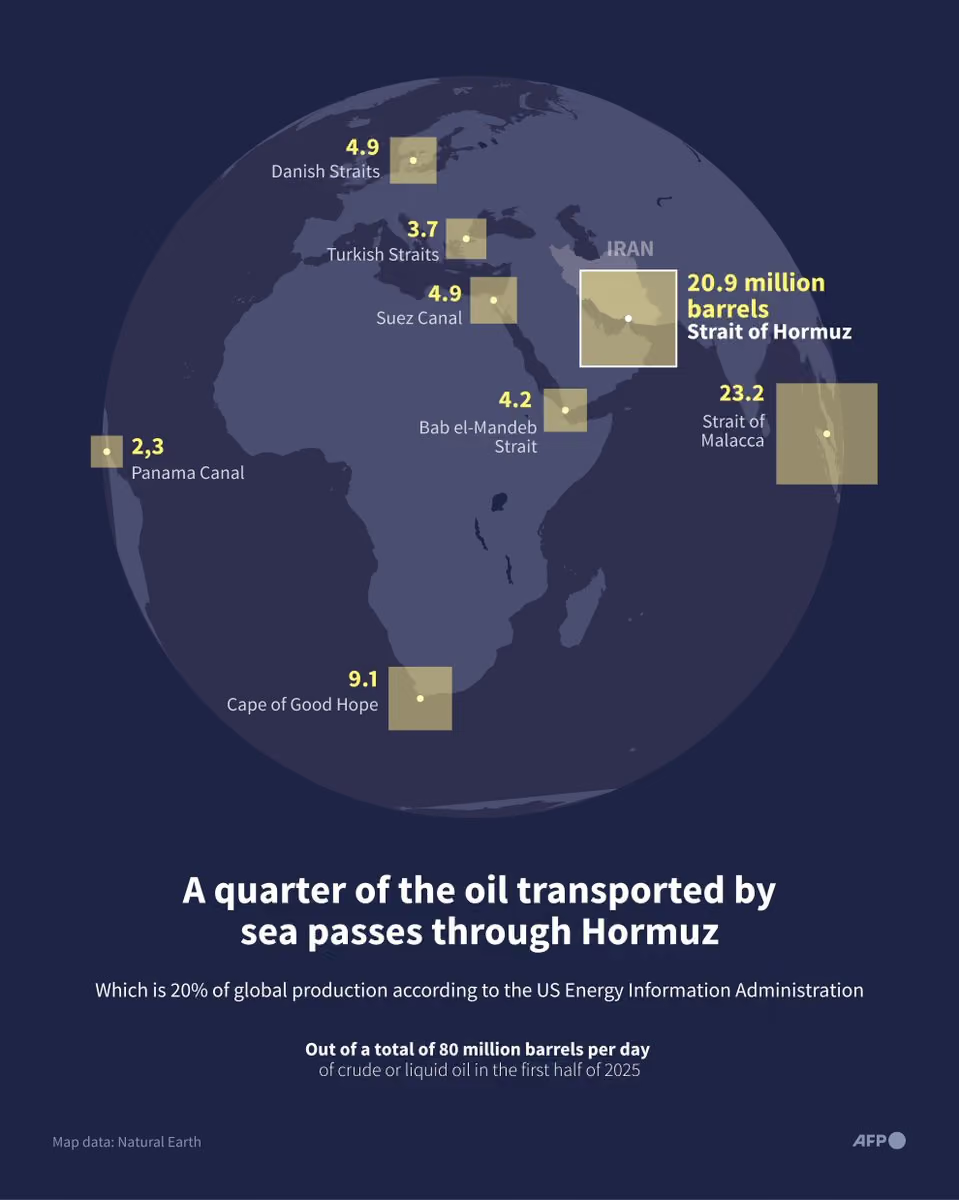
The Strait of Hormuz is one of the most critical energy chokepoints in the global economy. Nearly 20.9 million barrels of the world’s oil supply moves through this narrow maritime corridor every day. If the strait were to close for an extended period, the consequences could ripple across global energy markets, transportation systems, and economic stability worldwide.
The economic impact of a Strait of Hormuz closure could extend far beyond the Middle East. In the global energy system, certain locations hold a significance far greater than their physical size, and the Strait of Hormuz is one of them.
In the global energy system, certain locations hold a significance far greater than their physical size. The Strait of Hormuz is one of those places. This narrow maritime corridor connecting the Persian Gulf to the Gulf of Oman functions as one of the most critical energy chokepoints in the world. Every day, oil tankers move through this passage carrying energy supplies from the Middle East to global markets.
The economic impact of a Strait of Hormuz closure would therefore extend far beyond the region itself. Disruptions in this corridor could influence global oil supply, energy markets, transportation systems, and ultimately the broader global economy tension.
According to the data presented in the analysis, approximately 20.9 million barrels of oil pass through the Strait of Hormuz every day. This volume highlights how deeply the global energy system depends on the uninterrupted movement of oil through this single maritime route. Under normal circumstances, this flow continues quietly in the background of the world economy. Oil tankers depart from export terminals in the Persian Gulf, transit through the strait, and deliver crude oil to refineries and industrial economies across Asia and other regions.
However, if the Strait of Hormuz were to remain closed for an extended period particularly for more than three months the consequences for global oil supply disruption could become significant. Energy markets rely on continuous flows of supply. When a key transportation corridor is suddenly removed from that system, the balance between supply and demand can quickly become unstable.
In such a situation, the issue would no longer be limited to a regional maritime disruption. Instead, it would become a structural challenge for the global energy market. Countries that rely heavily on oil imports from the Persian Gulf , including China, India, Japan, and South Korea would face increasing pressure to secure alternative energy supplies.
From an economic perspective, disruptions in major energy corridors often extend beyond the oil market itself. Energy shortages can influence transportation networks, industrial production, and supply chains that depend on stable access to fuel. When energy supply becomes constrained, the effects can gradually spread through multiple sectors of the global economy.
For this reason, a prolonged closure of the Strait of Hormuz is not simply a geopolitical event. It represents a potential structural shock to the global energy system. In the sections that follow, we examine how such a disruption could affect global oil supply, major importing economies, and the broader economic landscape shaped by energy markets.
Global Oil Supply Disruption if the Strait of Hormuz Remains Closed
If the Strait of Hormuz were to remain closed for an extended period, the first and most immediate consequence would appear in the global oil supply. The modern energy system depends on continuous transportation routes that connect producing regions with consuming economies. When one of the most important of these routes is suddenly removed, the effects begin to unfold across the global energy market.
Under normal conditions, approximately 20.9 million barrels of oil per day move through the Strait of Hormuz. This flow represents a significant portion of the world’s maritime oil trade. Oil exported from countries in the Persian Gulf travels through this narrow corridor before reaching global markets.
When analysts consider the economic impact of a Strait of Hormuz closure, one of the first questions they ask is whether other routes could replace this massive energy flow. In theory, some of the oil exports from the Persian Gulf can bypass the strait through pipeline infrastructure that connects production fields to export terminals located outside the Gulf.
These pipelines already exist and are used as part of the region’s export network. However, their total capacity remains far smaller than the volume of oil that normally moves through the Strait of Hormuz.
According to the data presented in the analysis, the combined replacement capacity of these pipelines is approximately 4.7 million barrels per day. These routes allow a portion of Gulf oil exports to reach global markets without passing through the strait. Yet even if these pipelines were operating at full capacity during a disruption, they would only redirect a fraction of the energy that normally moves through Hormuz.

This gap between normal flows and replacement capacity creates the initial shock in the global energy system.
Based on the estimates in the analysis, the early stage of a prolonged closure could produce a global supply gap of roughly 16 million barrels per day. Such a reduction in available supply would represent a major disruption to global energy markets, forcing importing countries to seek alternative sources and potentially draw from strategic reserves.
Over time, additional mechanisms could begin to soften part of this disruption. Strategic petroleum reserves may be released, exporters might increase the use of available alternative infrastructure, and some shipping routes could be adjusted. When these options are considered together, the analysis estimates that the total capacity of alternative solutions could reach between 9 and 12 million barrels per day.
Even under these conditions, however, the imbalance would not disappear entirely.
The remaining shortage would likely be concentrated in the energy markets of the Eastern hemisphere. According to the study, a prolonged disruption could leave Eastern markets facing an energy shortfall of approximately 6 to 10 million barrels per day.
At this scale, the effects extend beyond the oil market itself. A reduction in global oil supply affects transportation, industrial activity, and supply chains that depend on stable energy flows. As the shortage moves through these systems, the economic impact of a Strait of Hormuz closure gradually spreads across the global economy.
For that reason, understanding which economies rely most heavily on these energy flows becomes essential. In the next section, we examine how a prolonged disruption in the Strait of Hormuz could affect the major energy-importing economies of Asia and reshape their access to energy supplies.
Energy Shortages in Asian Economies
If the flow of oil through the Strait of Hormuz were to stop for an extended period, the consequences would quickly move beyond the Middle East and reach the economies that rely most heavily on imported energy. Among these, the major economies of Asia would be at the center of the shock.
A large portion of the oil that passes through the Strait of Hormuz is shipped to Asian markets. Countries such as China, India, Japan, and South Korea are among the world’s largest energy consumers, and a significant share of their imported oil originates in the Persian Gulf. As a result, a prolonged disruption in this corridor would directly affect their access to energy supplies.
When global oil supply disruption continues over time, the impact does not fall equally across all economies. The level of vulnerability depends on factors such as dependence on imported oil, the size of national energy reserves, and the ability to manage supply shortages.
According to the data presented in the analysis, China would experience a very strong initial supply shock if the Strait of Hormuz remained closed. At the same time, China maintains a relatively high level of energy reserves. This capacity could help partially absorb the pressure created by a sudden reduction in oil supply. In other words, although China would face a significant disruption, its storage capacity may allow it to manage part of the shock in the early stages of the crisis.
The situation appears more challenging for India. Similar to China, India would experience a very strong initial supply shock in the event of a prolonged closure. However, the country’s energy storage capacity is assessed as more limited. This difference means that India could be more vulnerable to a sustained disruption in energy imports.
In contrast, Japan presents a different profile. Although Japan relies heavily on imported energy, it maintains a very high level of strategic energy reserves. This storage capacity may allow the country to respond more effectively to temporary supply disruptions and maintain stability in its energy system during the early stages of a crisis.
South Korea occupies a position somewhere between these cases. The country would face a significant initial shock to its energy supply if flows through Hormuz were interrupted. However, its relatively strong storage capacity could help maintain a certain degree of stability during a prolonged disruption.
Taken together, these differences illustrate how the economic impact of a Strait of Hormuz closure would vary across major importing economies. While all of these countries depend on energy flows from the Persian Gulf, their ability to absorb supply shocks is not identical.
What becomes clear from this analysis is that a prolonged disruption in the Strait of Hormuz is not simply a regional transportation issue. Instead, it represents a potential shift in the balance of energy security for some of the world’s largest industrial economies.
Yet the effects of such a disruption would not end with energy shortages alone. As the shortage spreads through energy markets, it begins to influence other sectors that depend on stable fuel supplies. In the next section, we examine how a prolonged disruption in the Strait of Hormuz could affect diesel availability, transportation systems, and global supply chains.
Diesel Shortages and Global Transportation Disruption
As global oil supply disruption continues, the consequences of the crisis extend beyond crude oil markets alone. In the modern global economy, energy is not simply a commodity—it is the foundation of transportation, logistics, and industrial production. When the flow of energy becomes unstable, the effects quickly move through multiple layers of economic activity.
One of the first areas where this disruption becomes visible is in the market for refined fuels, particularly diesel. Diesel plays a critical role in global transportation systems. It powers trucks, shipping fleets, heavy machinery, and large parts of the global logistics network. For that reason, any reduction in diesel supply can quickly influence transportation costs and supply chains around the world.
According to the data presented in the analysis, a prolonged closure of the Strait of Hormuz could effectively remove around 3 to 4 million barrels of diesel per day from global supply. In a market that depends on steady fuel availability, such a reduction could place considerable pressure on transportation systems and industrial operations.
When diesel supply tightens, the first visible effects often appear in global transportation networks. Maritime shipping, freight transport, and large-scale logistics operations rely heavily on petroleum-based fuels. As diesel availability declines, transportation costs tend to increase, and these higher costs gradually move through supply chains.
This dynamic can influence the price of many goods in global markets. When transportation becomes more expensive, the cost of moving products—from raw materials to finished goods—also rises. Over time, these pressures can begin to affect production costs, trade flows, and supply chains that depend on efficient global logistics.
Alongside diesel markets, the liquefied natural gas (LNG) trade could also experience disruptions. According to the analysis, Qatar’s LNG exports to East Asia pass through the Strait of Hormuz. A prolonged disruption in this corridor could therefore affect LNG supply to several major Asian economies.
Countries such as China, India, Japan, and South Korea are among the key importers of LNG in the region. If shipments through Hormuz were interrupted, these markets could face tighter supply conditions and increased pressure on energy prices.
In this way, the economic impact of a Strait of Hormuz closure spreads gradually through the energy system. What begins as a disruption in crude oil transportation can extend into refined fuels, transportation networks, and global energy trade.
As these pressures move through the global economy, the effects are no longer confined to energy markets alone. Transportation costs rise, supply chains face increasing stress, and industries that rely on stable energy inputs begin to experience additional pressure.
In the next section, we explore how these energy disruptions could influence industrial production, petrochemical markets, and agricultural supply chains, further expanding the economic consequences of a prolonged disruption in the Strait of Hormuz.
Impact on Industry, Petrochemicals, and Global Supply Chains
As the global oil supply disruption continues, the effects of the crisis extend beyond crude oil markets and transportation systems. Energy is not only a fuel for movement; it is a fundamental input for modern industrial production. When the flow of energy becomes unstable, the consequences gradually spread into manufacturing, chemical production, and global supply chains.
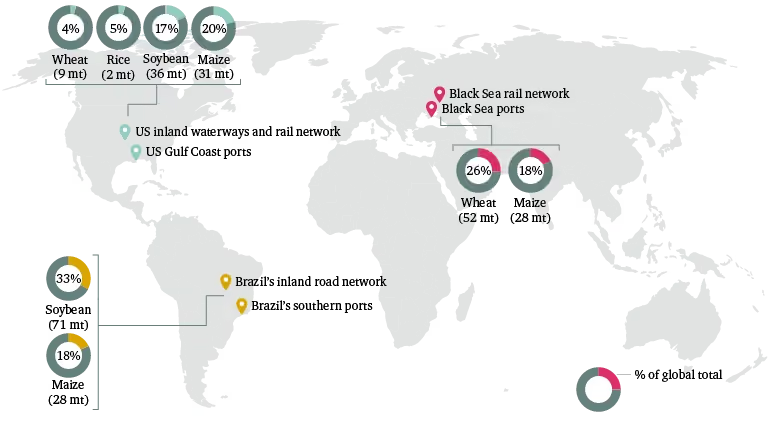
The Strait of Hormuz is not only a route for crude oil shipments. It also plays an important role in the movement of a wide range of industrial products and raw materials. According to the data presented in the analysis, several important commodities connected to global trade pass through this region, including petrochemicals, fertilizers, ammonia, polyethylene, and other industrial chemicals.
These products form a crucial part of the global production system. Many industries depend on them as essential inputs for manufacturing processes. When the transportation of these materials becomes uncertain, the effects can quickly spread to industrial activity in multiple regions of the world.
Alongside industrial materials, several agricultural commodities are also part of the broader trade flows associated with the region. Products such as wheat, corn, rice, and sugar play an important role in global food supply chains. Changes in transportation costs or energy availability can influence how these commodities move through international markets.
If the Strait of Hormuz closure were to continue for an extended period, rising energy and transportation costs could gradually influence the price of these goods. Higher fuel costs and disruptions in shipping routes may increase the overall cost of producing and distributing many essential products.
Under these conditions, manufacturing industries may also face increasing pressure. Industrial facilities depend on stable access to energy, chemical inputs, and reliable transportation networks. When any of these elements becomes uncertain, production processes can become more expensive and less predictable.
This chain of effects illustrates how a disruption in a single strategic energy corridor can gradually spread across multiple layers of the global economy. First, the impact appears in oil markets. Then it moves into refined fuels and transportation systems. Over time, industrial production and global supply chains also begin to experience the consequences.
For this reason, a prolonged disruption in the Strait of Hormuz is not viewed solely as an energy issue. Instead, it represents a broader economic shock that can influence global trade, industrial production, and the availability of key commodities.
In the next section, we examine how these disruptions could translate into broader economic pressure, including rising costs and wider impacts on the global economy.
Inflationary Pressure in the Global Economy
When global oil supply disruption continues over a longer period, its effects gradually move beyond energy markets and begin to influence the broader economy. At first, the pressure appears in crude oil and fuel markets, but over time the higher cost of energy spreads across multiple economic sectors.
Energy is a fundamental input in transportation, industrial production, agriculture, and the manufacturing of raw materials. As a result, when the flow of energy becomes constrained, the cost of economic activity increases across many parts of the global economy.
In a scenario where the Strait of Hormuz remains closed for more than three months, reduced oil supply, tighter availability of refined fuels such as diesel, and disruptions in LNG trade could increase the overall cost of energy in international markets. These higher costs gradually appear in transportation expenses, industrial production costs, and the price of goods moving through global supply chains.
Under such conditions, the global economy may begin to experience inflationary pressure. Industries that rely on stable energy inputs must absorb higher fuel costs, and these increases can eventually translate into higher prices for products in global markets.
This dynamic illustrates how a disruption in a strategic energy corridor such as the Strait of Hormuz can evolve from a regional geopolitical issue into a broader economic challenge. The process typically begins in oil and fuel markets, then moves into transportation and industry, and eventually influences the price of goods across the global economy.
In the final section, we summarize why the Strait of Hormuz remains one of the most sensitive points in the global energy system and why a prolonged disruption could have consequences that extend far beyond the Middle East.
Why the Strait of Hormuz Remains a Critical Global Energy Chokepoint
The Strait of Hormuz has long been recognized as one of the most important energy chokepoints in the world. A significant portion of global oil exports moves through this narrow corridor connecting the Persian Gulf to international markets.
As the analysis in this study shows, the economic impact of a Strait of Hormuz closure would not be limited to a regional disruption. The daily flow of roughly 20.9 million barrels of oil passing through the strait demonstrates how deeply global energy markets depend on this single route.
If the corridor were to remain closed for more than three months, the consequences would likely unfold in several stages. First, the global oil supply would face a significant gap as pipeline alternatives could replace only a limited portion of the normal flow. Even with alternative routes and strategic reserves, a substantial supply imbalance could remain.
Second, major Asian energy-importing economies such as China, India, Japan, and South Korea would face varying levels of supply pressure depending on their dependence on Gulf oil and their storage capacity.
Third, the disruption could spread beyond crude oil markets into diesel supply, LNG trade, transportation systems, and global supply chains, affecting industries that rely heavily on stable access to fuel and raw materials.
Over time, these pressures could translate into higher transportation costs, industrial disruptions, and inflationary pressure across global markets.
Frequently Asked Questions
How much oil passes through the Strait of Hormuz each day?
Approximately 20.9 million barrels of oil move through the Strait of Hormuz every day, making it one of the most important energy chokepoints in the global economy.
What would happen if the Strait of Hormuz closed?
A prolonged closure of the Strait of Hormuz could disrupt global oil supply, increase transportation costs, and create inflationary pressure across multiple sectors of the global economy.
Why is the Strait of Hormuz important for global energy markets?
The Strait of Hormuz connects the Persian Gulf with international markets and carries a significant share of global oil exports. Disruptions in this corridor can affect energy supply chains worldwide.
Understanding the economic impact of a Strait of Hormuz closure helps investors, policymakers, and global markets better assess the risks associated with one of the world’s most critical energy corridors.