.svg)
.svg)
Best Investments Through the End of 2026: Opportunities and Risks

If you had only one investment opportunity until the end of 2026, where would you put your money?
U.S. stocks? Gold? Treasury bonds? Bitcoin? Or perhaps opportunities that receive less attention in conventional investment lists—from power grids and transformers to data centers, nuclear energy, and AI infrastructure?
For investors in Saudi Arabia, Oman, and Dubai, the answer is not determined solely by an asset’s potential return. U.S. interest rates, inflation, energy prices, artificial intelligence growth, infrastructure development, and shifts in the global economy can all influence asset values and investment trends.
That is why there is no single best investment through the end of 2026 for everyone. One investor may prioritize capital preservation and relatively stable income, while another may be willing to accept greater volatility in pursuit of higher growth.
From U.S. stocks and Treasury securities to gold, copper, energy, power infrastructure, data centers, artificial intelligence, real estate, and cryptocurrencies, each opportunity has a different risk and return profile. For each option, we will look at its growth potential, the type of investor it may suit, the risks involved, and why it could remain relevant through the end of 2026.
Because in today’s market, making the right investment decision is not simply about finding an asset with growth potential. You also need to understand which opportunity aligns with your objectives, investment horizon, and risk tolerance.
Why Is Choosing the Best Investment in 2026 More Difficult?
Finding the best investment in 2026 is no longer simply a matter of asking, “Which asset is likely to rise the most?” For investors in Saudi Arabia, Oman, and Dubai, factors such as U.S. interest rates, inflation, energy prices, artificial intelligence growth, and large-scale infrastructure investment can all reshape the direction of financial markets.
On one side, yields on U.S. Treasury securities and money market instruments may remain attractive to investors seeking stability, liquidity, and lower risk. On the other, the growth of artificial intelligence and rising electricity demand are creating new opportunities for more risk-tolerant, long-term investors across stocks, energy, power grids, and technology infrastructure.
At the same time, inflation and economic uncertainty have kept assets such as gold, silver, and inflation-protected securities such as TIPS relevant for investors focused on preserving purchasing power.
Therefore, no single asset can be considered the best investment through the end of 2026 for everyone. The right choice should be based on the investor’s objectives, time horizon, and risk tolerance.
These differences in investor objectives highlight the first group of important opportunities for 2026: stocks and fixed-income instruments that can potentially balance capital growth, income, and risk management.
U.S. Stocks and the Bond Market: Two Major Investment Paths in 2026
For investors in Saudi Arabia, Oman, and Dubai, the U.S. market offers a wide range of opportunities, from large-cap stocks to Treasury and corporate bonds. Choosing between these options depends primarily on the investor’s objectives, investment horizon, and tolerance for risk.
U.S. Stocks: Growth Opportunities in a Technology-Driven Economy
U.S. stocks may be suitable for investors with a long-term investment horizon and a higher tolerance for market volatility. Companies operating in technology, artificial intelligence, and the digital economy remain among the areas attracting significant investor attention.
However, elevated valuations, potential market corrections, and changes in interest rates can create substantial volatility. Continued investment in artificial intelligence and technology could remain one of the factors keeping U.S. stocks in focus through the end of 2026.
Short-Term U.S. Treasuries: An Option for Stability and Liquidity
Short-term U.S. Treasury securities are generally more attractive to investors who prioritize capital preservation, liquidity, and relatively stable income. Their price volatility is typically lower than that of longer-term bonds, although falling interest rates can reduce the yields available on newly issued securities.
Interest-rate levels and Treasury yields in 2026 could therefore continue to make these instruments relevant for liquidity management and reducing overall portfolio volatility.
Medium- and Long-Term Treasuries: Opportunity Amid Interest-Rate Changes
Medium- and long-term Treasury securities may be more appropriate for investors with longer time horizons who can tolerate fluctuations caused by changes in interest rates.
Their greater sensitivity to interest rates increases their risk, but it can also create an opportunity for price appreciation if rates decline. As a result, the direction of U.S. monetary policy through the end of 2026 will remain an important factor in determining the attractiveness of this asset class.
Inflation-Protected Securities: Preserving Purchasing Power
U.S. Treasury Inflation-Protected Securities, or TIPS, can be considered by investors concerned about declining purchasing power. Their performance is influenced by inflation, interest rates, and real yields, meaning they are not risk-free.
Nevertheless, if inflation concerns persist through 2026, TIPS could remain relevant within portfolios focused on managing inflation risk.
Corporate Bonds: Higher Income With Greater Credit Risk
Investment-grade corporate bonds may be suitable for moderate-risk and income-oriented investors, while high-yield corporate bonds are generally more appropriate for investors with a higher risk tolerance.
The potential for higher income comes with greater credit risk and a higher probability of default. Economic conditions and the spread between corporate bond yields and Treasury yields could create opportunities through the end of 2026 for investors willing to accept greater credit risk in exchange for potentially higher income.
Money Market Instruments and Private Credit: Two Options for Different Objectives
Money market instruments can be useful for investors who prioritize liquidity and stability. Private credit, by contrast, is more relevant to sophisticated and risk-tolerant investors because it may offer higher income potential, but it also involves greater default risk and typically lower liquidity.
Overall, U.S. stocks can strengthen the growth component of a portfolio, while Treasuries and money market instruments can play a greater role in stability and liquidity management.
For investors seeking greater diversification and additional protection against inflation and economic uncertainty, however, real assets become increasingly relevant. This brings gold, silver, and copper into focus.
Gold, Silver, and Copper: Three Different Opportunities in the Metals Market
Precious and industrial metals can play very different roles in an investment portfolio. For investors in Saudi Arabia, Oman, and Dubai, gold is primarily associated with wealth preservation, while silver and copper are more closely linked to industrial growth and infrastructure demand.
Gold: An Option for Preserving Wealth
Gold can be suitable for investors seeking diversification and potential protection against inflation and economic risks; such protection is not guaranteed. However, its price can be affected by interest rates, the value of the U.S. dollar, and changes in global demand. Unlike bonds, gold does not generate periodic income.
Through the end of 2026, continued economic, inflationary, and geopolitical concerns could keep gold on investors’ radar, particularly for those who do not want to allocate all of their capital to higher-risk assets.
Silver: A Combination of Investment and Industrial Demand
Silver may be more attractive to investors who are interested not only in diversification but also in growing industrial demand. The metal is used in areas such as energy, electronics, and technology, although it typically experiences greater volatility than gold.
Continued growth in technology and energy industries could support silver demand through the end of 2026, although economic conditions and price volatility can increase the risk associated with this investment.
Copper: Investing in Infrastructure Growth
Copper is more closely tied to economic and infrastructure development than gold or silver. Rising electricity consumption, expansion of transmission networks, construction of data centers, and the growth of new technologies can all increase demand for the metal.
As a result, copper may be suitable for investors willing to accept greater risk in order to benefit from long-term industrial and infrastructure trends. On the other hand, an economic slowdown or decline in industrial activity could put pressure on demand and prices.
Through the end of 2026, increased investment in power infrastructure and the digital economy could be an important factor supporting copper demand. But this dependence on infrastructure growth leads directly to another major investment theme for 2026: energy and electricity.
Energy and Power Infrastructure: The Foundations of the 2026 Economy
The growth of artificial intelligence, data centers, and electricity consumption has made energy and power infrastructure important areas of investment. For investors in Saudi Arabia, Oman, and Dubai, the development of energy infrastructure is particularly significant.
Uranium and Nuclear Energy
Uranium and nuclear energy are generally more suitable for long-term and risk-tolerant investors. Growing demand for reliable electricity could support the sector, but uranium price volatility, regulatory risks, and project delays remain significant concerns.
The expansion of nuclear capacity could keep this sector on investors’ radar through the end of 2026.
Oil and Gas
Oil and gas remain important for investors seeking diversification and exposure to the energy market. Prices are influenced by global supply and demand, economic growth, and geopolitical developments, and can be highly volatile.
Continued global energy demand is one of the main reasons this sector is likely to remain relevant through the end of 2026.
Power Grids and Transmission Equipment
Rising electricity consumption requires investment in generation, transmission, and distribution networks. This area may be attractive to medium- and long-term investors, although project costs, regulation, and reliance on large-scale capital investment remain important risks.
Growing electricity demand and infrastructure development could support demand for power grids and equipment such as transformers through the end of 2026.
Rising electricity consumption brings us directly to one of the most important investment trends of 2026: the expansion of AI infrastructure and data centers.
AI Infrastructure: An Investment Opportunity Beyond Technology Companies
The growth of artificial intelligence is not limited to software and chip companies. Advanced AI models require data centers, electricity, networking equipment, and sophisticated cooling systems. This broader ecosystem can create new investment opportunities.
Data Center Infrastructure
Data centers may be attractive to investors with medium- to long-term horizons and moderate to high risk tolerance. Rising demand for AI computing is supporting the expansion of data center capacity, but construction costs, high energy consumption, and the risk of technological change remain key challenges.
Continued corporate investment in AI could keep demand for data centers elevated through the end of 2026.
AI Infrastructure
Computing equipment, networking systems, and other services required by artificial intelligence allow investors to participate in the growth of the AI industry without concentrating their exposure entirely in a single technology company.
However, high valuations and the rapid pace of technological change can create significant investment risks.
Data Center Cooling
Increasing processor density has intensified the need for advanced cooling systems. This area may be worth considering for risk-tolerant investors interested in technology infrastructure, although its dependence on continued data center construction remains a key risk.
Overall, AI growth requires substantial physical investment—from buildings and electricity to equipment and energy management. This makes infrastructure one of the major investment trends to watch through the end of 2026.
Real Estate and Cryptocurrencies: Two Different Options for a 2026 Portfolio
Real estate and digital assets behave very differently, but both can be considered as potential diversification tools within an investment portfolio. Cryptocurrencies can increase portfolio risk and do not reliably provide diversification in every market condition.
Real Estate Investment Trusts and Real Estate Companies
Real estate investment trusts (REITs) and companies operating in the real estate sector may suit investors seeking income, exposure to real assets, and portfolio diversification without directly purchasing a property.
Interest-rate risk and real estate market conditions are among the key factors affecting their performance. Continued development of the real estate market and new projects in cities such as Dubai could keep this sector in focus through the end of 2026.
Bitcoin: A High-Risk Opportunity for Risk-Tolerant Investors
Bitcoin may be suitable for investors with a high tolerance for volatility and a long-term investment horizon. Significant price swings, regulatory changes, and broader market risk remain among its most important challenges.
Growing adoption of digital assets could continue to keep Bitcoin on investors’ radar through the end of 2026.
Ethereum: Investing in the Blockchain Economy
Ethereum is more than a digital asset. It also provides infrastructure for smart contracts and decentralized applications.
This can make it more attractive to risk-tolerant investors interested in the long-term development of blockchain technology. However, high volatility, competition between blockchain networks, and regulatory risks should all be considered.
Beyond these assets, several strategic industries could also create different investment opportunities through the end of 2026, driven by the long-term needs of the global economy.
Strategic Industries: Opportunities Beyond Short-Term Trends
Defense and Aerospace
Rising defense spending in many countries and the need to modernize military equipment could support companies operating in the defense and aerospace industries.
This sector may be more attractive to investors seeking exposure to a long-term and strategically important trend.
Agricultural Commodities
Food is a fundamental necessity, while climate change, population growth, and supply fluctuations can influence agricultural commodity markets.
Investing in this area can potentially improve portfolio diversification and provide a degree of protection against certain inflationary shocks.
Healthcare and Medical Technology
Rising healthcare spending, an aging global population, and advances in medical technology are strengthening long-term demand for healthcare services and equipment.
Companies operating in pharmaceuticals, medical devices, and health technology may benefit from these structural trends.
Alongside these industries, one important question remains: Which investment is most suitable for your financial objective? The answer to that question is more important than the asset selection itself.
Best Investments Through the End of 2026 Based on Investor Objectives
There is no single asset that is the best choice for every investor. Someone in Saudi Arabia, Oman, or Dubai who prioritizes capital preservation has different needs from an investor who is willing to accept greater volatility in pursuit of long-term capital growth.
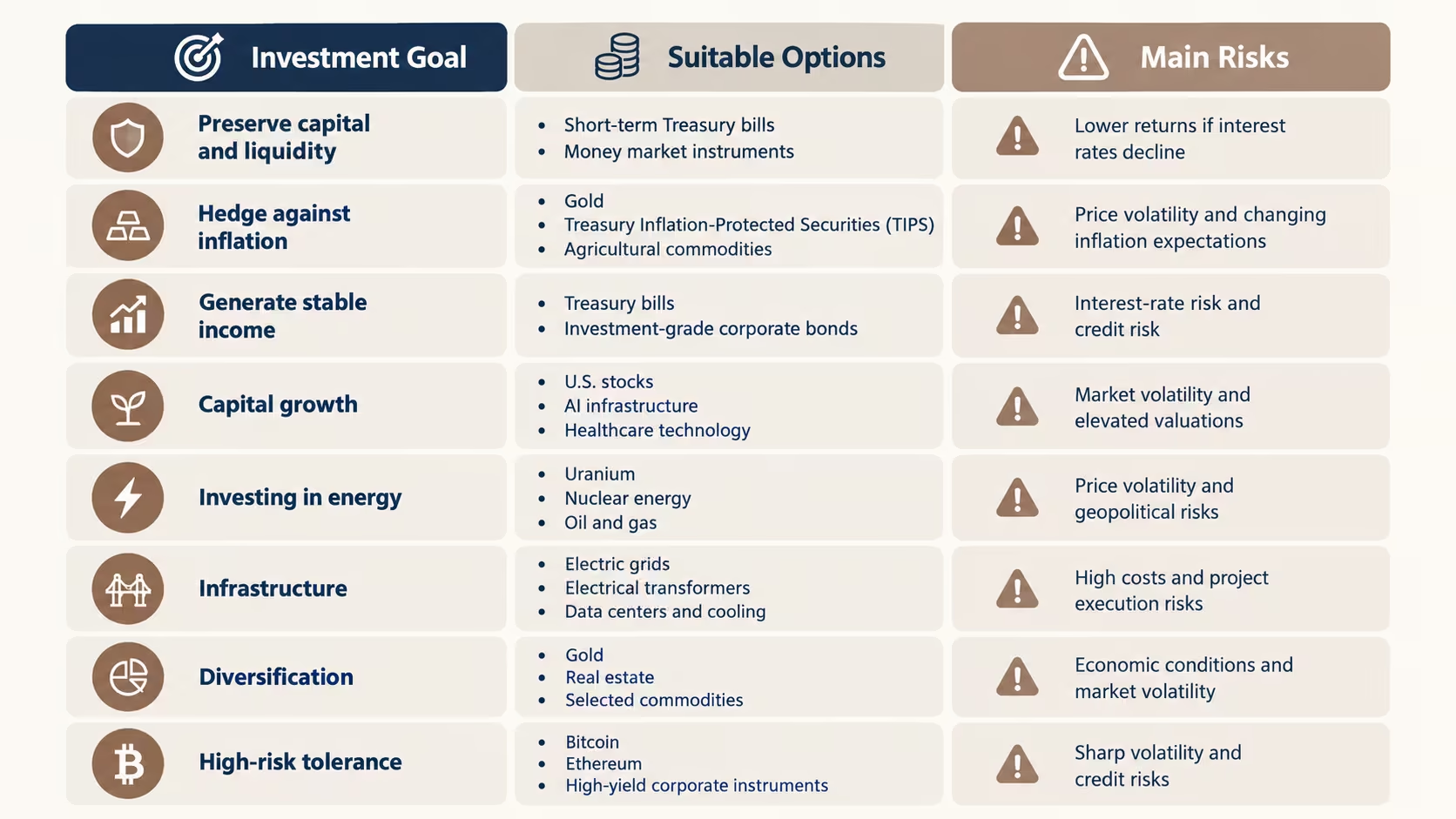
For capital preservation and liquidity, short-term Treasuries and money market instruments are options, although reinvestment returns may fall with interest rates. Gold, TIPS and agricultural commodities may help address inflation risk, while Treasuries and investment-grade corporate bonds can support income with interest-rate and credit risks. U.S. stocks, AI infrastructure and healthcare technology offer growth potential with valuation and market risks. Energy and infrastructure investments face price, geopolitical, cost and execution risks. Gold, real estate and selected commodities can broaden a portfolio, while Bitcoin, Ethereum and high-yield corporate bonds require greater tolerance for volatility or credit losses.
Combining multiple asset classes can reduce an investor’s reliance on a single market. For example, growth-oriented assets can be held alongside bonds and liquid instruments, while gold or TIPS can help manage part of the portfolio’s inflation risk.
Ultimately, choosing the best investment through the end of 2026 is less about chasing a hot asset and more about building a portfolio that matches the investor’s objectives, investment horizon, and risk tolerance.
Conclusion: What Is the Best Investment Through the End of 2026?
The 2026 market offers investors a broad range of opportunities, from U.S. stocks and Treasury securities to gold, copper, energy, power infrastructure, data centers, artificial intelligence, real estate, and cryptocurrencies.
For investors in Saudi Arabia, Oman, and Dubai, choosing among these options should be based on financial objectives, investment horizon, and risk tolerance. Income-generating assets can help provide greater portfolio stability, while stocks, technology, and emerging infrastructure offer greater potential for capital growth. Gold and selected real assets can also play a role in managing inflation risk and improving diversification.
Therefore, the best investment through the end of 2026 is not necessarily a single asset. Instead, it may be a combination of opportunities, with each asset serving a different role within the investment portfolio.
At Dar Al Tharwah, our goal is to help investors evaluate opportunities, manage risk, and develop financial strategies aligned with their objectives. With professional financial advice from the Dar Al Tharwah team, investors can make investment decisions with a more structured and informed approach.