.svg)
.svg)
U.S. Government Shutdown: Economic Effects and Dubai Exposure

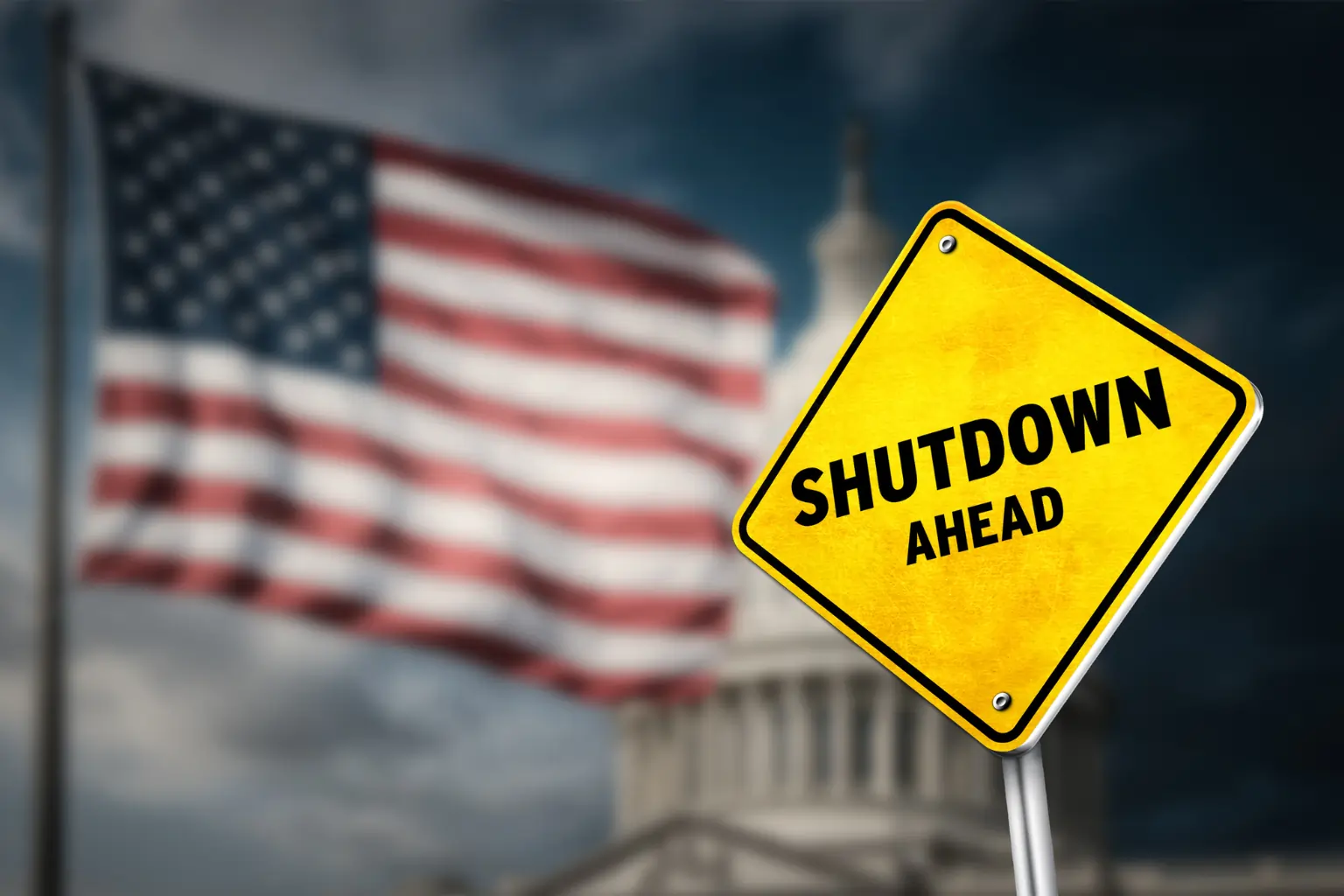
When this article was first published on October 1, 2025, a lapse in U.S. federal appropriations had just begun. That funding gap later ended on November 12, 2025, when new appropriations legislation was signed into law, according to the Congressional Research Service. The event is therefore no longer ongoing, but it remains a useful case study in how fiscal disruptions can affect government activity, economic data, businesses, workers, and market expectations.
A U.S. government shutdown is more precisely a lapse in appropriations. The U.S. Government Accountability Office explains that the Antideficiency Act generally requires agencies to stop activities funded by expired appropriations, while functions that are legally excepted or supported by other funding can continue. The practical effects vary by agency: some employees are furloughed, some excepted employees continue working, and contracts, permits, data releases, grants, or public services may be delayed.
The market effects of a shutdown are less mechanical than the headlines can suggest. The dollar, gold, U.S. Treasuries, equities, and commodities respond simultaneously to interest-rate expectations, inflation data, growth expectations, geopolitical developments, positioning, and other factors. A shutdown can add uncertainty or delay official data, but it does not create a reliable directional signal for gold, the dollar, or equities. For background on gold’s role during uncertainty, see Gold as a Safe Haven: Outlook and Risks.
For investors, the more defensible response is to separate the event itself from assumptions about market direction. A shutdown may affect economic activity and specific businesses, but portfolio decisions should still be based on liquidity needs, diversification, valuation, time horizon, and risk capacity rather than on a single political event.
The 2025 episode was not the first U.S. funding lapse. Earlier shutdowns differed in duration, agencies affected, macroeconomic conditions, and the policy backdrop. Historical cases are useful for understanding operational and economic channels, but they do not provide a dependable trading template for future shutdowns.
The practical financial lesson is information discipline: verify what has actually stopped, identify which economic releases or federal services are affected, distinguish measured impacts from market speculation, and avoid treating a political deadline as an automatic buy or sell signal.
This article therefore focuses on what can be established from official evidence: how shutdowns work, what earlier shutdowns disrupted, how duration changes the economic cost, and which channels may matter for investors and businesses in Dubai. It is educational analysis, not a prediction of market prices or a recommendation to trade around political events.
Historical U.S. Government Shutdowns and Their Impacts
1. Obama Era – 2013
The October 2013 shutdown lasted 16 calendar days. The GAO reported that roughly 850,000 federal employees were furloughed for at least part of the shutdown and that agencies experienced operational, grant, contract, and service disruptions.
- Economic activity: GAO cited a Bureau of Economic Analysis estimate that the direct effect reduced fourth-quarter 2013 real GDP growth by about 0.3 percentage points.
- Federal operations: delays affected areas including research, contracts, grants, and public services.
- Markets: it is difficult to isolate the shutdown’s effect on the dollar, gold, or equities from other events occurring at the same time.
2. Clinton Era – 1995–1996
Fiscal year 1996 included two shutdowns: one lasting 5 days in November 1995 and another lasting 21 days from December 1995 into January 1996, according to GAO’s historical shutdown data.
- Operational lesson: a funding lapse can affect agencies differently depending on which appropriations have expired and which activities are excepted.
- Historical comparison: the 21-day episode was the longest shutdown in the period covered by GAO until the 35-day partial shutdown of 2018–2019.
Market lesson: the historical record does not support a simple rule linking shutdown duration to a predetermined direction for the dollar, gold, or stock indexes.
How Shutdown Duration Changes Economic Risk
1. Short Shutdown
- Government operations: initial effects tend to be concentrated in furloughs, delayed services, contracts, permits, and data releases at affected agencies.
- Economic impact: the aggregate effect can be limited when the lapse is short, although individual workers and businesses may still face meaningful disruption.
- Markets: price reactions can occur, but the direction of the dollar, gold, and equities cannot be inferred from shutdown duration alone.
2. Several-Week Shutdown
- Spending and demand: delayed federal compensation, procurement, and services can have a larger effect on household and business activity.
- Private-sector spillovers: firms dependent on federal approvals, contracts, permits, or affected customers can experience delays or lost income.
- Uncertainty: investors may reassess growth and policy expectations, but asset-price outcomes remain dependent on the wider macroeconomic environment.
3. Shutdown Longer Than One Month
- Economic cost: CBO’s analysis of the 2025 shutdown found that negative effects increase with duration and that most, but not necessarily all, lost output is later recovered.
- 2025 evidence: in October 2025, CBO modeled four-, six-, and eight-week scenarios and estimated progressively larger fourth-quarter growth effects as the shutdown lengthened.
Investment implication: a longer shutdown can increase macroeconomic uncertainty, but it still does not justify a deterministic forecast for gold, the dollar, interest rates, or equity indexes.
Impacts of the U.S. Government Shutdown on Dubai
1. Currency Fluctuations and Impact on the UAE Dirham
The UAE dirham is maintained at a fixed exchange-rate peg to the U.S. dollar. The Central Bank of the UAE publishes intervention rates around AED 3.672–3.673 per U.S. dollar. This means the dirham does not independently “strengthen against the dollar” when the dollar moves; instead, the AED generally moves with the USD against third currencies. Changes in U.S. interest-rate expectations can also influence UAE monetary conditions through the peg.
2. Impact on Trade Agreements and Joint Investments
A shutdown does not automatically suspend U.S.–UAE trade or private contracts. The more relevant channel is whether a specific transaction depends on an affected U.S. federal agency—for example, a permit, certification, procurement decision, grant, or regulatory process. CBO and GAO have documented such delays in earlier shutdowns, but the effect varies by agency and transaction.
3. Impact on Dubai Stock Market
Dubai Financial Market can react to global risk sentiment, U.S. interest-rate expectations, oil prices, company earnings, regional capital flows, and many other variables. A U.S. shutdown may become one input into investor expectations, but it does not imply that DFM prices must fall. For broader market context, see UAE Capital Markets: Structure, 2025 Performance and Key Trends.
4. Impact on Tourism
A U.S. shutdown does not by itself imply a decline in American tourism to Dubai. The effect would depend on whether travel-related federal services, consumer confidence, flight operations, passport or visa processing, or household finances were materially affected. Tourism exposure should therefore be evaluated with actual visitor and travel data rather than assumed from the shutdown headline alone.



.avif)
.webp)

